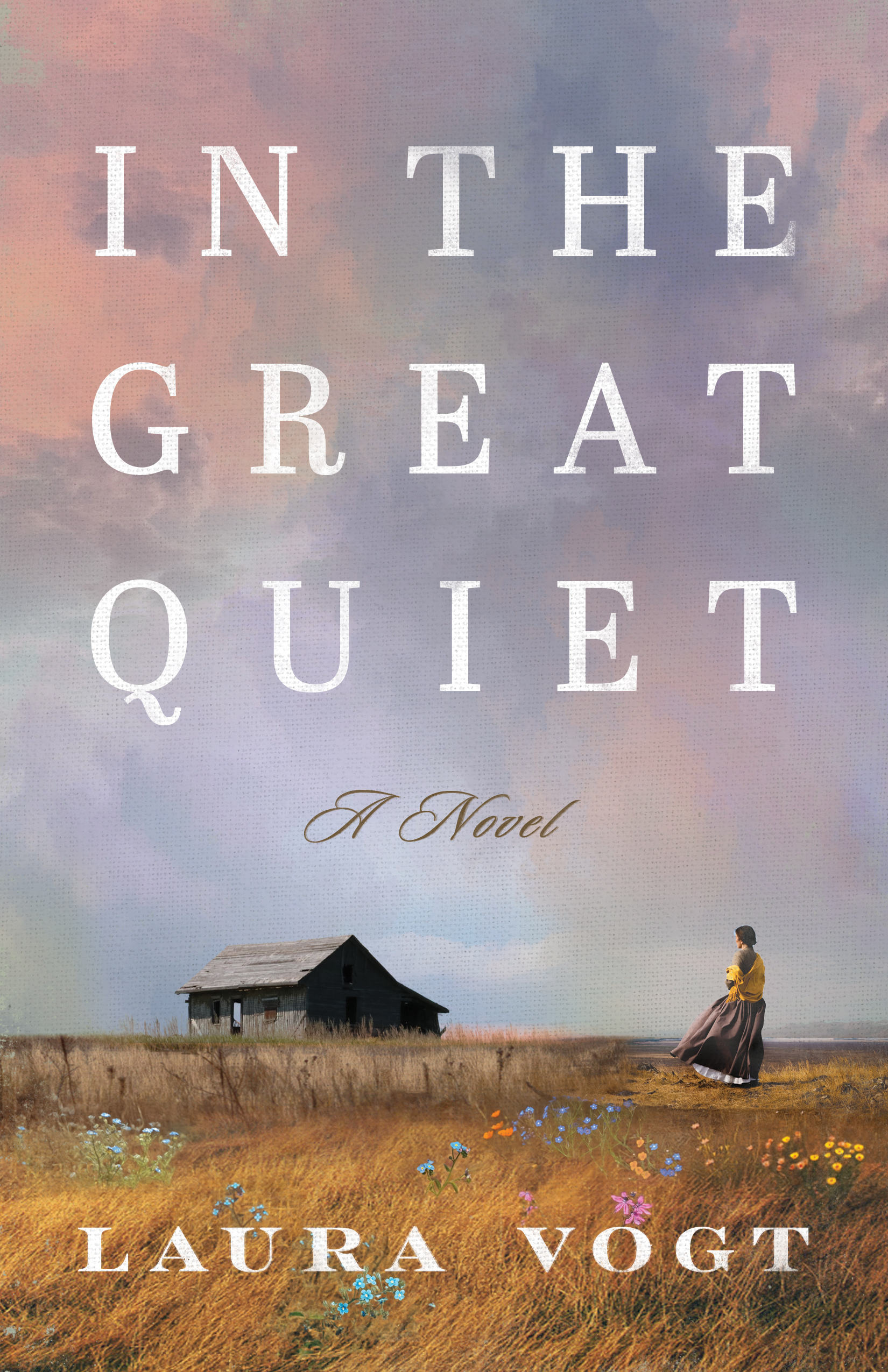
Jessica’s 4th Epilogue: The Great Quiet by Laura Vogt
Laura Vogt’s novel, The Great Quiet, is a historical fiction set during the American frontier era, specifically in 1893 at the time of the Oklahoma land rush. This period marked a pivotal moment when women began to gain the right to own land. The story centers on Minnie, whose journey is not only about setting up a homestead on previously uninhabited land but also about survival and personal growth. As Minnie faces various challenges, she finds that she must seek help from others, forging connections with fellow pioneers, outlaws, Native Americans, and the very land itself.
What makes this story even more special is that it draws inspiration from the author’s own distant relatives, serving as a heartfelt tribute to her ancestors. Minnie stands out as a relatable character. The author skillfully brings Minnie’s personality to life, showing her strength, independence, and resilience—a necessity for women in this time period. Despite her spitfire and hard personality, through glimpses into Minnie’s memories, readers understand her reasons for leaving her family behind to start anew. This gives us insight into her struggles and vulnerability.
A particularly moving passage for me, recalls Minnie’s mother: “She resembled all the other mas, with perhaps a pinch more spunk, a bit more joy. But I watched her closer after that, and I realized: My ma walked through town different. She didn’t let anyone tell her how a woman was supposed to be. A woman could be whomever she wanted. And now, here I was, homesteading on land that was to be my own. My ma and her ma and all the women before her would be so proud that I had carved out a space of my very own.” This moment beautifully honors the influence of past generations, emphasizing how family history shapes our identity and helps us achieve our goals and dreams.
One of the novel’s unique elements is its use of alternating viewpoints, including the Earth as a character. The story weaves in teachings from the Osage Indians about their deep connection to nature, which inspires me to reconnect with the nature. Reading this in the springtime, as the Earth comes alive, heightens my sense of renewal and nostalgia. The scenes where Minnie interact with the land, or where the land sees her, evoke a profound sense of peace and longing. Symbolism, such as the willow tree and the tale of Yarrow—”a thousand petals dripping in starlight” as told by Niabi—adds depth to these moments.
The book truly left me in awe. The incredibility of perseverance of women in history. Women, just like us, for hundreds and thousands of years found themselves at peace and relying on the land, connecting to nature, using the exact same resources as we turn to today whether creating families, surviving on home remedies or finding a sense of belonging.
Quick Thoughts:
Writing Style: Perfect, it was descriptive when needed, relatable, informative and dramatic at all the right times.
Characters: I loved Minnie and all the relationships we saw her develop. We had pioneers, outlaws, Indians, Earth and all the emotions and complications that come with it!
Plot Structure: I was engaged and loved every word.
Themes: Nature & Environment, Community, Inner Peace & Reflection
Pacing and Tone: This flowed very well.
This book is a must-read, especially for fans of historical fiction. It masterfully blends themes of love, loss, and the search for belonging, all rooted in the idea that who we are is shaped by where we come from.
Overall rating: 5 stars!

 Jessica's Epilogue
Leave a comment