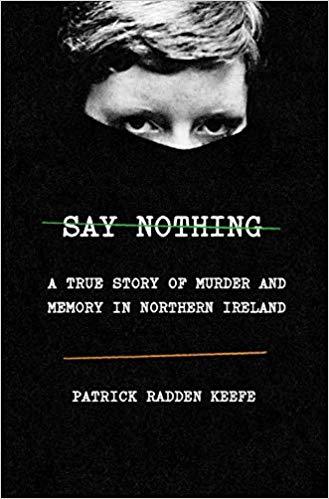
For my 22nd Epilogue, I’m bringing you a recap on, Say Nothing: A True Story of Murder and Memory in Northern Ireland by Patrick Radden Keefe. It is a compelling nonfiction account that delves into Ireland’s turbulent history during The Troubles and the complex legacy of the Irish Republican Army (IRA). I’ve always been fascinated by Ireland, so this book was a natural starting point for my goal to read nonfiction from around the world.
The narrative spans from the late 1960s through the Good Friday Agreement of 1998, offering a deeply researched look at political violence, secrecy, and the human cost of conflict. I listened to the audiobook, which was both engaging and meticulously investigative—Keefe’s research shines through every chapter.
One of the most haunting stories is that of Jean McConville, a mother of ten who was abducted from her Belfast home and accused of being a British informant. Her disappearance, along with many others known as “the disappeared,” captures the tragedy and fear that defined the era.
Keefe also profiles key IRA figures such as Gerry Adams, Brendan Hughes, and Dolours and Marian Price, exploring events like Bloody Sunday and the Old Bailey bombing. The sections on hunger strikes were particularly striking—showing the tension between resistance and the British government’s harsh response, including force-feeding prisoners.
If you’re interested in learning more about Ireland’s complex and violent history, Say Nothing is an excellent choice—whether you read it or listen to it.


Leave a Reply